

Thinking about a career as an X-ray tech? You’re not alone! With the demand for skilled professionals in the healthcare field soaring, this path offers a unique blend of stability and excitement. Imagine being the superhero behind the scenes, helping doctors diagnose and treat patients without wearing a cape—just a lab coat and a smile!
But before you start daydreaming about your future in scrubs, you might be wondering: how long does it actually take to become an X-ray tech? Spoiler alert: it’s not as long as waiting for your coffee to brew. In this article, we’ll break down the time commitment involved, from schooling to certification, so you can plan your journey to this rewarding career with confidence.
Overview Of X-Ray Technician Career
X-ray technicians, also known as radiologic technologists, play a vital role in healthcare. They perform diagnostic imaging examinations, aiding physicians in detecting and treating medical conditions. This profession ranks among the fastest-growing careers in the healthcare sector, driven by technological advancements and the rising need for imaging services.
Educational requirements for X-ray techs typically involve completing an accredited program. Most programs offer an associate degree, lasting about 24 months. Some institutions also provide certificate programs that can take around 12 months. Curriculum components often include anatomy, patient care, and radiation safety.
Certification is essential in this field. Most states require licensure, and certification from an accredited body, like the American Registry of Radiologic Technologists (ARRT), enhances job opportunities. Candidates usually pass a national exam to obtain certification, demonstrating their knowledge and skills in the profession.
Continuing education remains crucial for X-ray technicians. Maintaining certification requires completing specific continuing education credits every two years. Staying updated with technological developments helps them provide better patient care, ensuring they stay competitive in the job market.
Job prospects for X-ray technicians look promising. The U.S. Bureau of Labor Statistics projects employment growth of 7% from 2021 to 2031. This growth reflects an increasing demand for medical imaging services, indicating a secure future in the field. Many work in hospitals, outpatient clinics, and imaging centers, providing diverse work environments.
Pursuing a career as an X-ray technician offers a stable and fulfilling path in the healthcare industry. With the right education, certification, and commitment to ongoing learning, individuals can thrive in this essential role.
Educational Requirements
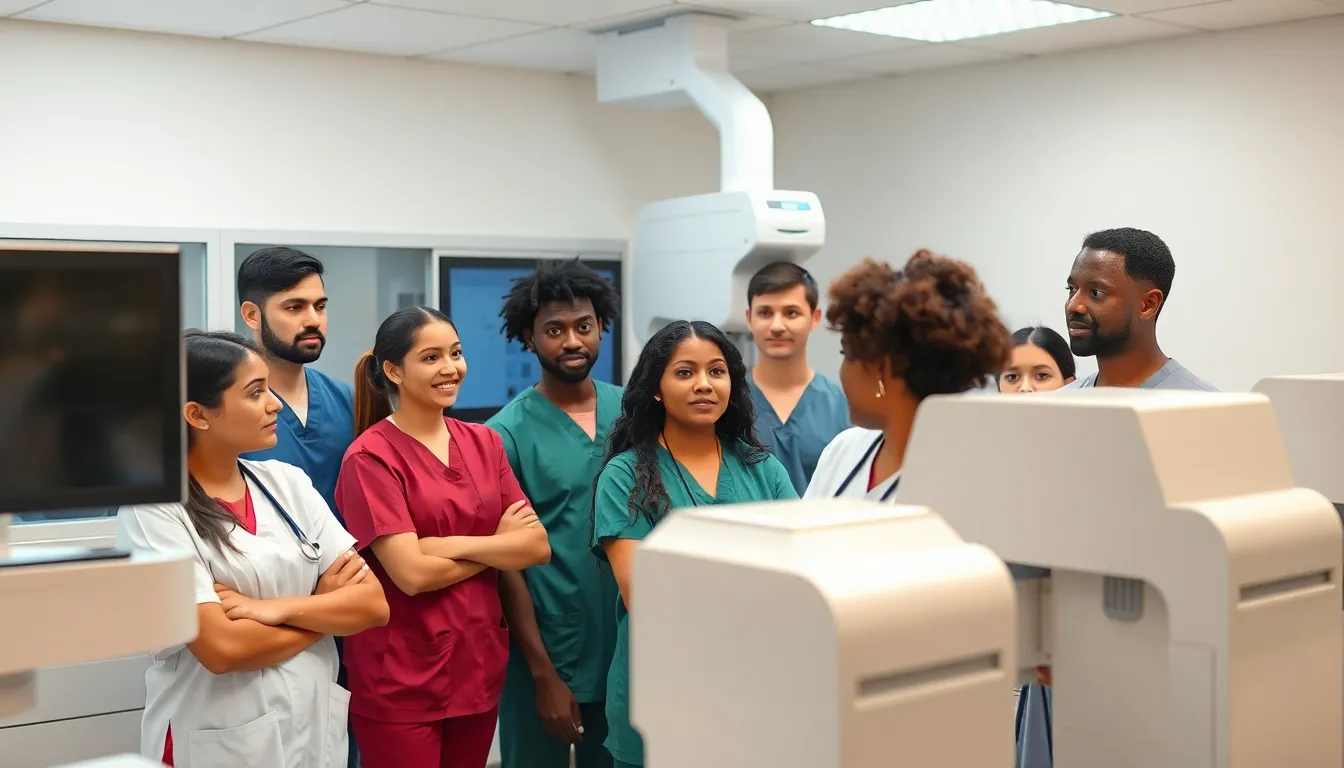
Becoming an X-ray technician involves specific educational steps. Prospective students typically start their journey with a high school diploma, laying the foundation for further studies.
High School Diploma
High school graduates possess basic skills in math and science, essential for understanding radiologic technology. Courses in biology, chemistry, and physics greatly benefit aspiring technicians. Strong communication skills also enhance interactions with patients and medical staff. Completion of a high school diploma is the initial requirement for entry into accredited programs, acting as a gateway to advanced education.
Associate Degree Programs
Associate degree programs typically last 24 months and focus on both theoretical knowledge and practical experience. Accredited institutions offer these programs, ensuring students learn essential imaging techniques and patient care. Core courses often include anatomy, radiographic procedures, and medical ethics. Hands-on clinical training provides invaluable experience in real-world settings, preparing graduates for their certification exams. Many programs integrate advanced technology training, equipping students with skills to adapt to ongoing innovations in medical imaging.
Certification and Licensure
Certification and licensure are crucial steps for aspiring X-ray technicians. These processes validate skills and ensure compliance with professional standards.
National Certification
National certification primarily requires passing an exam administered by the American Registry of Radiologic Technologists (ARRT). This exam assesses various competencies, including radiation safety and imaging techniques. Candidates must complete an accredited educational program before eligibility for the exam. Maintaining certification requires ongoing education to remain current with technological advancements and practices in the field. Many employers prefer or require ARRT certification, adding credibility to a technician’s qualifications.
State Licensure Requirements
State licensure requirements vary significantly across the United States. Most states mandate licensure for X-ray technicians, necessitating successful completion of a national certification exam. Some states offer additional requirements like clinical practice hours or specific coursework. It’s vital to investigate the specific rules in each state to ensure compliance. Regular renewal of state licenses typically involves continuing education, reinforcing the commitment to professional development and patient care standards.
Timeframe To Become An X-Ray Tech
Becoming an X-ray technician involves a defined timeframe encompassing education and clinical experience. Understanding these stages helps in planning the pathway to this rewarding career.
Duration of Education
Education typically lasts around 24 months when pursuing an associate degree. Many accredited programs focus on essential subjects such as anatomy, radiographic procedures, and medical ethics. Some institutions also offer shorter certificate programs, allowing students to enter the workforce more quickly. Completing coursework includes both theoretical and hands-on training, which is crucial for developing necessary skills. Foundations in math and science from high school provide a strong base for further studies.
Clinical Experience
Clinical experience is a critical component, often integrated into educational programs. Students gain practical training through supervised practice in hospitals or clinics. This direct exposure allows aspiring technicians to apply theoretical knowledge in real-world settings. Many programs require around 1,000 clinical hours to ensure comprehensive skill development. Engaging with patients and healthcare professionals during this time enhances communication and practical abilities essential for success in the field.
Career Advancement Opportunities
X-ray technicians can explore various career advancement opportunities to enhance their professional journey. Many start by gaining experience and specializing in certain areas of radiologic technology. Radiologic technologists may pursue certifications in fields such as computed tomography (CT), magnetic resonance imaging (MRI), or mammography, broadening their skillset and expertise.
Further educational pursuits also exist for those interested in leadership roles. Completing a bachelor’s degree in radiologic sciences positions individuals for management and administrative positions within healthcare facilities. Advancing to roles such as radiology supervisor or imaging department manager can lead to increased responsibilities and higher salaries.
Networking plays a crucial role in career growth. Attending industry conferences and joining professional organizations can introduce X-ray techs to job opportunities and mentorship programs, enabling them to connect with seasoned professionals. These connections often provide insights and guidance for navigating the career ladder.
Continuing education is essential in this field. Engaging in workshops and training courses not only meets the requirements for maintaining certification but also ensures technicians stay updated with technological advancements and best practices. This commitment to learning reflects a dedication to providing high quality patient care.
Many professionals also consider shifting to teaching roles or educational positions within academic institutions. Teaching future X-ray technicians can be a fulfilling career path, making significant contributions to the growth and development of the profession.
Looking to the future, leadership and specialized roles offer excellent prospects. U.S. Bureau of Labor Statistics data shows a 7% employment growth for radiologic technologists through 2031, further underscoring the valuable career advancements available in this dynamic field. The commitment to continuous learning and seeking certification can ultimately open doors to various career paths in radiologic technology.
Becoming an X-ray technician opens doors to a rewarding career in healthcare. With a growing demand for skilled professionals in this field, aspiring techs can look forward to stable job prospects and opportunities for advancement. The educational journey typically spans around 24 months, combining theoretical learning with essential hands-on experience.
Certification and state licensure are critical steps that validate a technician’s skills and knowledge. As technology evolves, ongoing education is vital for maintaining competence and enhancing career prospects. For those passionate about patient care and eager to contribute to the healthcare system, the path to becoming an X-ray tech is both achievable and fulfilling.