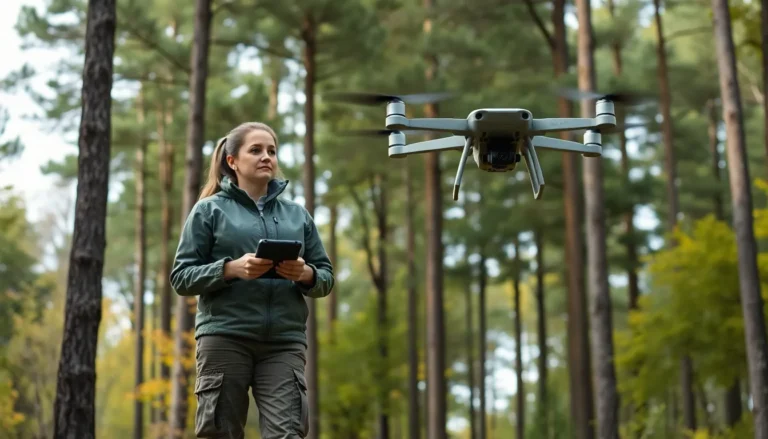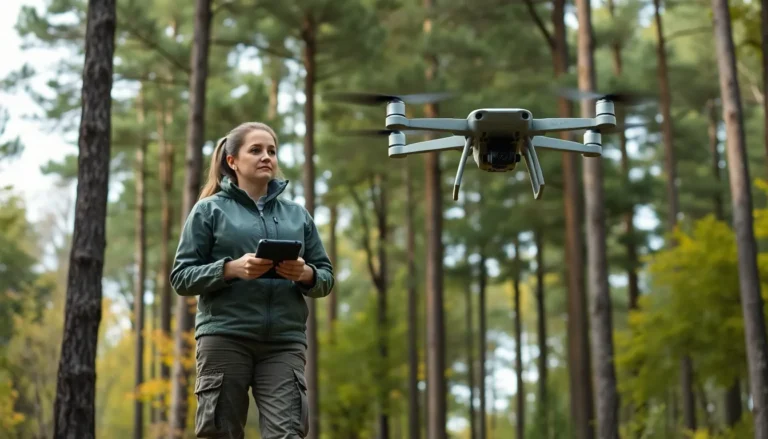

Drone cameras have revolutionized the way we capture and experience the world from above. With their ability to soar high and provide stunning aerial perspectives, these innovative devices have become essential tools for photographers, filmmakers, and hobbyists alike. The thrill of flying a drone while snapping breathtaking photos or videos offers a unique blend of technology and artistry.
As drone technology continues to advance, so do the features and capabilities of these cameras. From high-resolution imagery to real-time video streaming, drone cameras are pushing the boundaries of creativity and exploration. Whether it’s for professional use or personal enjoyment, understanding the ins and outs of drone cameras can unlock a new realm of possibilities for anyone eager to elevate their visual storytelling.
Overview of Drone Cameras
Drone cameras revolutionize aerial photography and videography, offering unique perspectives and creative opportunities. Their advanced technology allows users to capture high-quality images and videos from previously inaccessible angles.
History of Drone Cameras
Drone cameras trace back to military applications in the early 20th century. The first documented use occurred during World War I, when the Kettering Bug became the first unmanned aircraft equipped with cameras for reconnaissance. The commercial potential emerged in the 2000s, as miniaturization of technology made drone cameras accessible to hobbyists and professionals. The introduction of consumer-friendly models, such as the DJI Phantom series in 2013, greatly expanded the market, leading to widespread adoption and innovation in drone camera features.
Types of Drone Cameras
Various types of drone cameras cater to different needs and applications, including:
- Consumer Drones: Designed for casual users, these drones typically offer user-friendly interfaces, cameras with decent resolution (12-20 megapixels), and limited manual control.
- Professional Drones: Targeted at videographers and photographers, these drones often feature high-resolution cameras (up to 50 megapixels), advanced stabilization systems, and customizable settings.
- Racing Drones: Used in competitive racing, these drones are lightweight and equipped with high-speed cameras that capture real-time footage.
- Industrial Drones: Utilized in sectors like agriculture and construction, these drones come with specialized cameras for thermal imaging or 3D mapping, enabling advanced data collection and analysis.
Each type of drone camera offers distinct advantages, catering to varying preferences and requirements in aerial imaging.
Features of Drone Cameras
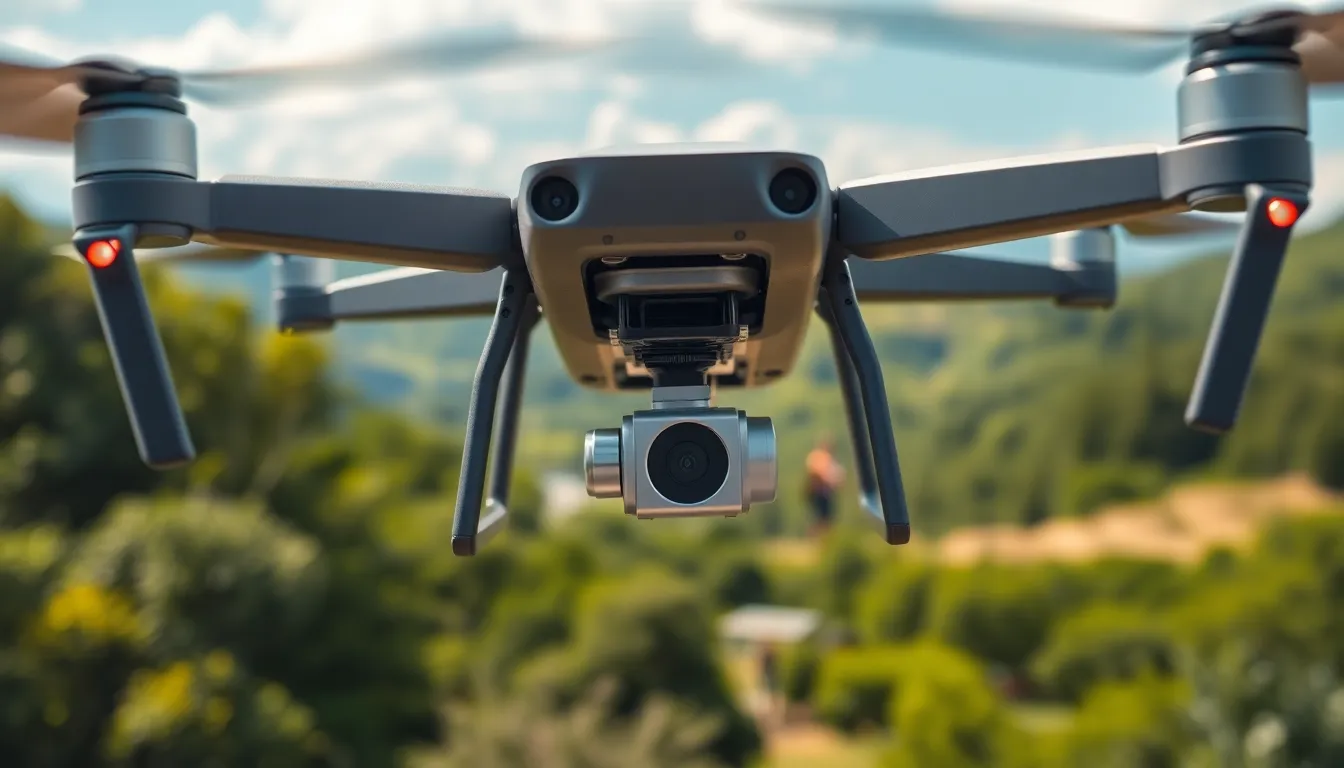
Drone cameras offer a variety of features that enhance aerial photography and videography. These features significantly impact image quality, operational capabilities, and user experience.
Camera Quality
Camera quality remains a primary concern for drone operators. High-resolution sensors, often ranging from 12 MP to over 100 MP, capture stunning details. Many drones support 4K video recording, ensuring sharp and vibrant footage. Advanced features like optical zoom provide versatility, allowing users to get closer to subjects without sacrificing image quality. Drones equipped with gimbals stabilize the camera, resulting in smooth, shake-free videos even in challenging conditions.
Flight Time and Battery Life
Flight time and battery life directly influence drone usability. Most consumer drones offer flight times between 20 to 30 minutes per charge, while advanced models can exceed 40 minutes. Battery technology, such as lithium-polymer (LiPo), enables quick charging times and extended use. Users often benefit from options to purchase additional batteries, ensuring longer shooting sessions without significant downtime.
Control Range
Control range determines the distance at which users can operate their drones. Most consumer-grade drones provide control ranges between 1,000 to 4,000 meters, enabling extensive exploration. High-end models may achieve ranges of up to 8 kilometers. Features like real-time video transmission enhance piloting capabilities, allowing operators to monitor live feeds at considerable distances for precise maneuvering.
Benefits of Using Drone Cameras
Drone cameras offer a variety of benefits across different fields, enhancing capabilities and providing perspectives that were once difficult to achieve. Their versatility makes them invaluable tools in photography, emergency services, and agriculture.
Aerial Photography
Aerial photography benefits tremendously from drone cameras thanks to unique viewpoints and high-quality imagery. Tight spaces and difficult terrains become easily accessible, enabling photographers to capture breathtaking landscapes and architectural details from above. Professional photographers advantageously use drones to create dynamic compositions. They equip drones with high-resolution sensors, often exceeding 20 MP, to ensure stunning visuals. The ability to shoot in 4K video adds further value for videographers seeking cinematic quality.
Search and Rescue Operations
Search and rescue operations see significant improvements with the use of drone cameras. Drones provide real-time aerial perspectives, allowing teams to locate missing persons or assess disaster situations rapidly. Equipped with thermal imaging capabilities, drone cameras can detect body heat in challenging conditions such as dense forests or debris. Teams can deploy drones for routine surveys of large areas, increasing efficiency and safety during emergencies.
Agricultural Monitoring
Agricultural monitoring benefits significantly from drone cameras, offering farmers a modern approach to crop management. Drones provide aerial imagery that assists in crop health assessment, pest detection, and yield estimation. High-resolution imaging combined with multispectral sensors allows for precise analysis of vegetation. Farmers can monitor large fields quickly, spotting issues that could affect crops and making data-driven decisions for improved productivity. The integration of drone technology into agriculture represents a leap forward in sustainable farming practices.
Popular Drone Camera Models
Numerous drone camera models cater to various needs and preferences. The following subsections provide insights into model comparisons and price ranges for these popular devices.
Model Comparisons
- DJI Mavic Air 2
Features a 48 MP camera and 4K video recording at 60 fps. Offers a flight time of up to 34 minutes and a control range of 10 kilometers. Compact size enhances portability.
- DJI Phantom 4 Pro V2.0
Equipped with a 20 MP camera and capable of 4K video recording at 60 fps. Flight time reaches 30 minutes with a control range of 7 kilometers. Ideal for professional photography and videography.
- Autel Robotics EVO Lite+
Boasts a 50 MP camera with 6K video recording capabilities. Provides flight time of up to 40 minutes and a control range of 12 kilometers. Excellent for capturing stunning aerial landscapes.
- Parrot Anafi
Includes a 21 MP camera and supports 4K HDR video. Offers a flight time of 25 minutes and a range of 4 kilometers. Lightweight design allows for easy handling.
- Skydio 2
Features a 12 MP camera and shoots 4K video at 60 fps. Flight time lasts 23 minutes, with an impressive autonomous flying capability. Designed for obstacle avoidance during complex maneuvers.
Price Ranges
| Model | Price Range |
|---|---|
| DJI Mavic Air 2 | $799 – $999 |
| DJI Phantom 4 Pro V2.0 | $1,699 – $1,899 |
| Autel Robotics EVO Lite+ | $949 – $1,249 |
| Parrot Anafi | $699 – $849 |
| Skydio 2 | $999 – $1,199 |
Various price ranges reflect the features and capabilities of different models. Entry-level drones typically range from $500 to $1,000, while mid-range models cost between $1,000 and $1,500. High-end drones aimed at professionals usually exceed $1,500. Considering these ranges enables buyers to select a drone camera that fits their budget and needs effectively.
Drone cameras have revolutionized the way people capture and experience the world from above. With advancements in technology and a variety of models available, enthusiasts can choose the perfect drone to suit their needs. Whether it’s for breathtaking photography or crucial applications like agriculture and emergency services, the versatility of drone cameras continues to expand.
As they become more accessible, these innovative tools empower users to explore their creativity and enhance their storytelling capabilities. The future looks bright for drone cameras as they push the boundaries of aerial imagery, making it an exciting time for both professionals and hobbyists alike.